
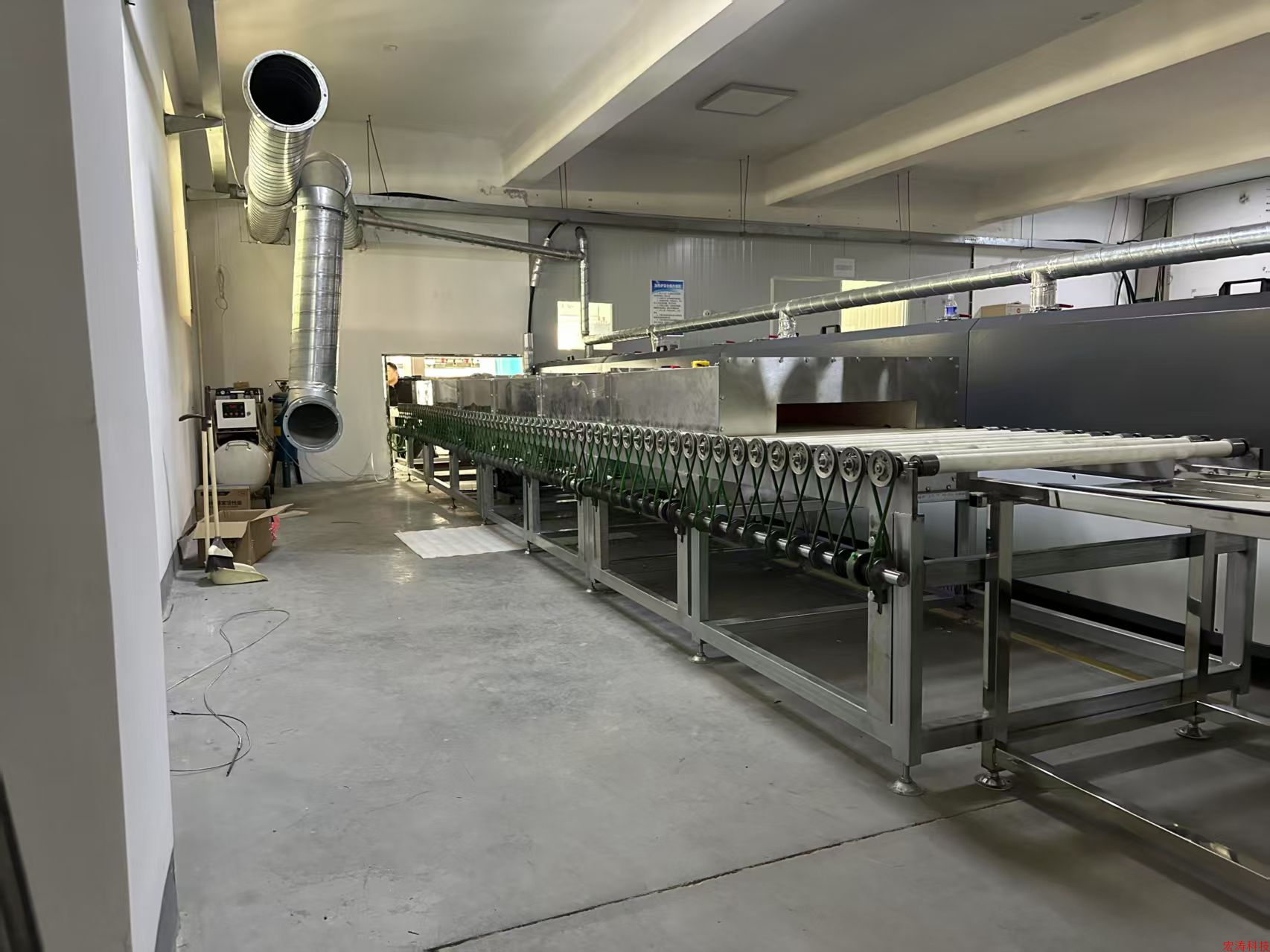
Waste photovoltaic panel pyrolysis furnace | Waste solar panel decomposition equipment | High temperature mesh belt sintering furnace
- Ruisen En
- Shijiazhuang
- stainless steel
Waste photovoltaic panel pyrolysis furnace | Waste solar panel decomposition equipment | High temperature mesh belt sintering furnace is a key equipment for realizing the resource recycling of photovoltaic waste through high-temperature decomposition technology. Its core principle is to cause the organic components such as EVA film and backing plate in the photovoltaic panel to undergo pyrolysis reaction under specific temperature conditions, thereby separating valuable materials such as glass, silicon wafer, and metal
Product details

The technical principle and core value of the pyrolysis furnace for waste photovoltaic panels
Waste photovoltaic panel pyrolysis furnace | Waste solar panel decomposition equipment | High temperature mesh belt sintering furnace
The pyrolysis furnace for waste photovoltaic panels is a key equipment for realizing the resource recycling of photovoltaic waste through high-temperature decomposition technology. Its core principle is to thermally decompose the organic components such as EVA film and backsheet in the photovoltaic panels under specific temperature conditions, thereby separating valuable materials such as glass, silicon wafers, and metals. This technology can not only reduce the environmental pollution caused by discarded photovoltaic panels, but also achieve the recycling of resources such as silicon, silver, copper, and aluminum, providing important support for the sustainable development of the photovoltaic industry.
Key technical parameters and equipment characteristics of pyrolysis furnace
Core technical parameters
Different models of pyrolysis furnaces have certain differences in parameters, but generally have the following key configurations:
Parameter category; Typical values
Power requirements; Three phase 380V (10% variation range), 50Hz
Working temperature; 0 ℃ -600 ℃ (actual pyrolysis temperature is usually controlled between 350 ℃ -450 ℃)
Transmission speed; 0.1-5m/min (adjustable, suitable for different processing capacity requirements)
Environmental adaptability; Working environment temperature: 0-40 ℃, relative humidity: 80%
Microwave leakage rate; ≤5mW/cm² (Compliant with national safety standards)
Equipment structure and performance advantages
- Multi layer insulation design: using high-temperature ceramic cotton insulation with a thickness of up to 300mm, effectively reducing heat loss and improving energy utilization efficiency.
- Multi heat source compatibility: supports multiple heat sources such as electricity, natural gas, diesel, biomass fuel, etc., adapting to different energy supply conditions in different scenarios.
- Automated control: equipped with automatic conveying devices and intelligent temperature control systems, reducing manual intervention, minimizing human errors, and meeting the needs of large-scale production.
- No dead angle heating: The new transmission structure ensures uniform heating of materials, avoids local overheating or non decomposition problems, and improves pyrolysis efficiency.
Process flow of pyrolysis treatment of waste photovoltaic panels
1. In the preprocessing stage, the aluminum frame and back plate of the photovoltaic panel are first removed by mechanical means to simplify the subsequent processing flow; Subsequently, the dismantled photovoltaic panels are crushed and sorted to ensure material uniformity.
2. In the pyrolysis reaction stage, the pre treated material is sent to a pyrolysis furnace and heated to 350 ℃ -450 ℃ in an oxygen free or oxygen deficient environment, causing the organic components such as EVA film (ethylene vinyl acetate copolymer) and TPT backboard (polytetrafluoroethylene and polyester film) to undergo pyrolysis, generating small molecule gases (such as carbon dioxide, methane, olefins, etc.), while achieving the separation of glass, silicon wafer, and metal.
3. Product separation and recovery: After pyrolysis, materials such as glass, silicon wafers, silver, copper, aluminum, etc. are separated by physical methods such as screening, magnetic separation, and gravity separation. Glass can be directly recycled and reused, while metals and silicon wafers can be further purified and reused in the photovoltaic industry chain.
4. The waste gas and by-products generated during the pyrolysis process are collected and treated through exhaust vents to avoid environmental pollution; Solid dust is collected through a waste ash collection funnel to achieve full process environmental control.
The application value and industry significance of pyrolysis method
- Resource recycling: Over 90% of the glass, over 80% of the metals (silver, copper, aluminum), and silicon materials in the recyclable photovoltaic panels significantly reduce dependence on primary resources.
- Environmental protection benefits: Replace traditional landfill or incineration treatment methods, reduce heavy metal and harmful organic matter pollution, and comply with the "Guiding Catalogue for Industrial Structure Adjustment"; Recycling and reusing waste materials; Encourage project requirements.
- Significant economic benefits: Recycled materials can be directly used in fields such as photovoltaics, electronics, and construction, forming a; Waste - Resources - Recycled Products; The closed-loop industrial chain creates considerable economic value.
Technological development trends and innovation directions
- Intelligent upgrade: Combining AI algorithms to optimize temperature control and material transfer parameters, improving pyrolysis efficiency and product purity.
- Process integration: Develop a continuous production line that integrates pretreatment, pyrolysis, and sorting, suitable for large-scale industrial applications.
- Low carbonization improvement: Explore the use of photovoltaic waste heat or clean energy to drive pyrolysis furnaces, further reducing carbon emissions throughout the entire lifecycle.
As the core technology for recycling waste photovoltaic panels, the continuous optimization of equipment and processes through pyrolysis will drive the photovoltaic industry towards; Green Manufacturing - Efficient Recycling - Circular Utilization; The sustainable mode transformation provides important support for the global energy transition and the achievement of dual carbon goals.
Tags:
Microwave High Temperature OvenContinuous tunnel high-temperature sintering furnaHigh temperature push plate kilnRoller kiln | Microwave roller kilnMicrowave high temperature furnace | Muffle furnacHigh temperature tower vertical kilnHigh temperature mesh belt sintering kilnHigh-temperature shuttle bell kilnHigh-temperature quartz tube furnaceHigh-temperature microwave rotary kilnHigh-temperature crucible and saggerAir source heat pump drying and dehumidifying machHigh-temperature insulation refractory material