
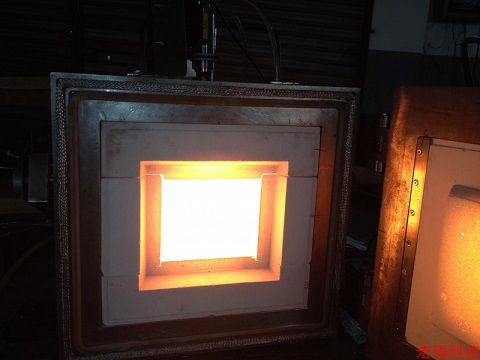
Small high-temperature experimental furnace | High temperature sintering furnace | Vacuum sintering furnace | Microwave high-temperature furnace
- Ruisen En
- Shijiazhuang
- stainless steel
Product details

Technical parameters and performance characteristics of small microwave experimental ovens
A small microwave experimental oven is a commonly used experimental equipment in the field of scientific research and development, which combines microwave heating with vacuum environment and is suitable for experimental scenarios such as material drying, pyrolysis, sintering, etc. Its core technical parameters and functional design need to meet the requirements of high-precision temperature control, safety and reliability, and convenient operation.
Comparison of Core Technical Parameters
There are differences in key parameters such as power, vacuum degree, and temperature range among different models of small microwave experimental ovens. The following is a comparison of parameters between two typical types of equipment:
Parameter category; Micro microwave vacuum dryer; Small microwave high-temperature and high vacuum experimental furnace
Microwave frequency; 2450± 10MHz 2.45GHz± 25MHz
Microwave power; 0~800W (continuously adjustable); 0.1-5.6Kw (continuously adjustable)
Ultimate vacuum degree; -0.08MPa ≤10⁻³ Pa
Working temperature range; Room temperature~100 ℃ (dehydration temperature); 1350 ℃ under vacuum, 1500 ℃ under normal pressure
Temperature control accuracy; ± 0.2 ℃ (infrared temperature measurement); ± 1 ℃ (infrared thermometer)
Equipment material; 304 stainless steel; Industrial grade high-temperature resistant materials (including pulley design)
Microwave leakage; ≤5mw/cm² (Compliant with national standards) ≤0.2mw/cm² (Far below the national standard)
Equipment functionality and experimental adaptability
Small high-temperature experimental furnace | High temperature sintering furnace | Vacuum sintering furnace | Microwave high-temperature furnace
1. Vacuum and atmosphere control capability
The micro device is equipped with a 1.5KW liquid ring vacuum pump with a maximum vacuum degree of -0.095MPa, suitable for low-temperature dehydration experiments (such as drying food and biological materials);
Small size supports high vacuum (10 ⁻³); Pa) and various atmospheres (nitrogen, inert gas, etc.) can meet the high-temperature sintering needs of ceramics, composite materials, etc.
2. Intelligent and secure design
Temperature control method: Miniature adopts button control, supporting 0-99 pulsation dehydration; Small models can be controlled through PLC+touch screen, with 18 preset temperature control curves, automatic data storage, and printing support;
Safety protection: Both have microwave leak proof interlocking mechanisms, and small models are equipped with additional water cooling systems, supporting 24-hour continuous operation and suitable for long-term experiments.
3. Experimental efficiency and applicable scenarios
The micro dehydration rate is 0.8~1.0kg· h/kw, Tray capacity 230mm× 45mm, Suitable for drying small batch samples;
Small loading spaceφ 180× 100mm, Support intermittent rapid firing and adapt to the research and development of multiple batches of high value-added materials (such as graphene and functional ceramics).
Selection suggestions and precautions
- Low temperature vacuum experiments (such as moisture determination and thermal sensitive material processing): Micro scale experiments are preferred as they have high low-temperature temperature control accuracy (0.2 ℃) and low cost;
- High temperature sintering or atmosphere experiment: It is recommended to use small-sized models that can achieve a maximum temperature of 1350 ℃ and inert atmosphere protection, meeting the requirements for high-temperature phase transition research of materials;
- Installation and maintenance: Pay attention to the power supply requirements of the equipment (220V single-phase for miniature and 380V three-phase for miniature), and regularly check the oil level of the vacuum pump and the service life of the microwave source (such as 5000 hours for miniature magnetron).
Technological advantages and industry applications
A small microwave experimental oven combines microwave heating with vacuum environment, which has significant advantages compared to traditional heating equipment:
- Efficient and energy-saving: Microwaves directly act on materials, resulting in minimal heat loss. By optimizing the cavity design through mathematical models, the energy utilization efficiency can be further improved;
- Sample protection: Low temperature vacuum environment can reduce the decomposition of thermosensitive components (such as micro used for dehydration of biological samples), while high temperature and high vacuum can inhibit oxidation and improve material purity;
- Research flexibility: adjustable power (0-5.6Kw), multi process curve preset and other functions, supporting diverse experimental needs such as material synthesis and pyrolysis mechanism.
This type of equipment is widely used in universities, research institutes, and enterprise R&D centers, playing an important role in basic research in fields such as new energy materials, biomedicine, and advanced ceramics.
Tags:
Microwave High Temperature OvenContinuous tunnel high-temperature sintering furnaHigh temperature push plate kilnRoller kiln | Microwave roller kilnMicrowave high temperature furnace | Muffle furnacHigh temperature tower vertical kilnHigh temperature mesh belt sintering kilnHigh-temperature shuttle bell kilnHigh-temperature quartz tube furnaceHigh-temperature microwave rotary kilnHigh-temperature crucible and saggerAir source heat pump drying and dehumidifying machHigh-temperature insulation refractory material