
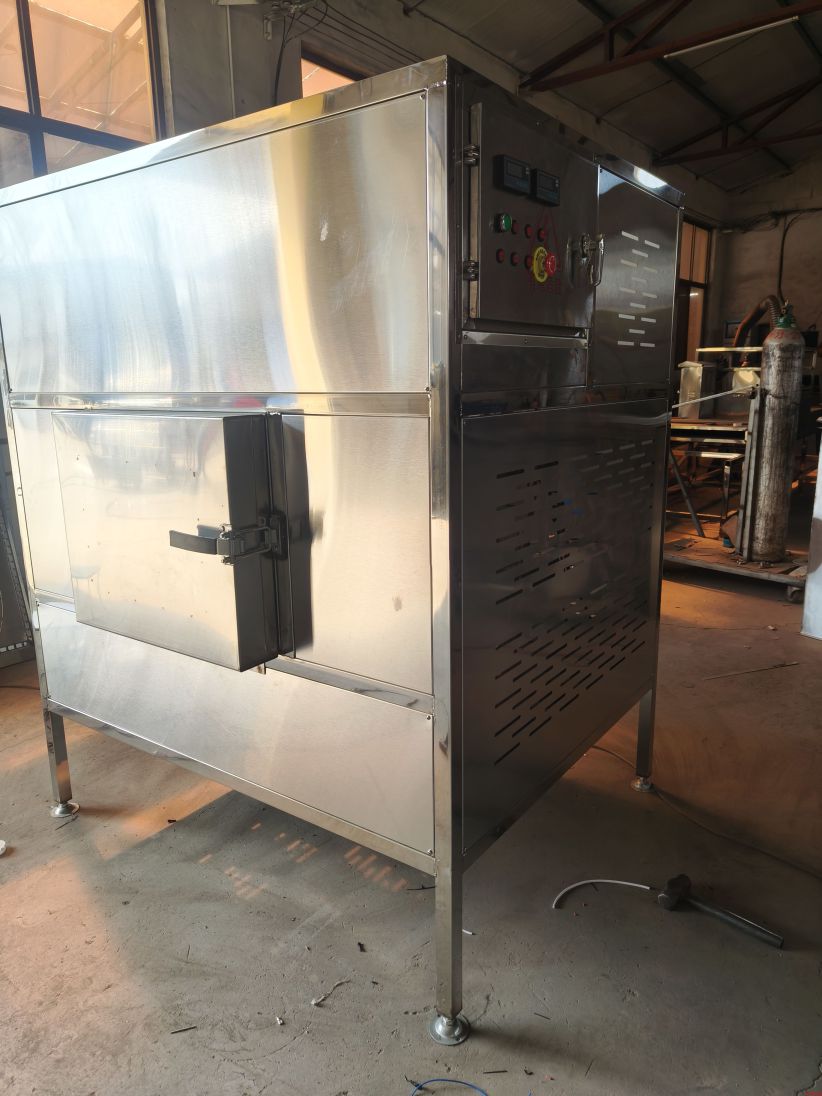
Laboratory microwave high-temperature muffle furnace | high-temperature sintering furnace | high-temperature box furnace|
- Ruisen En
- Shijiazhuang
- stainless steel
Product details
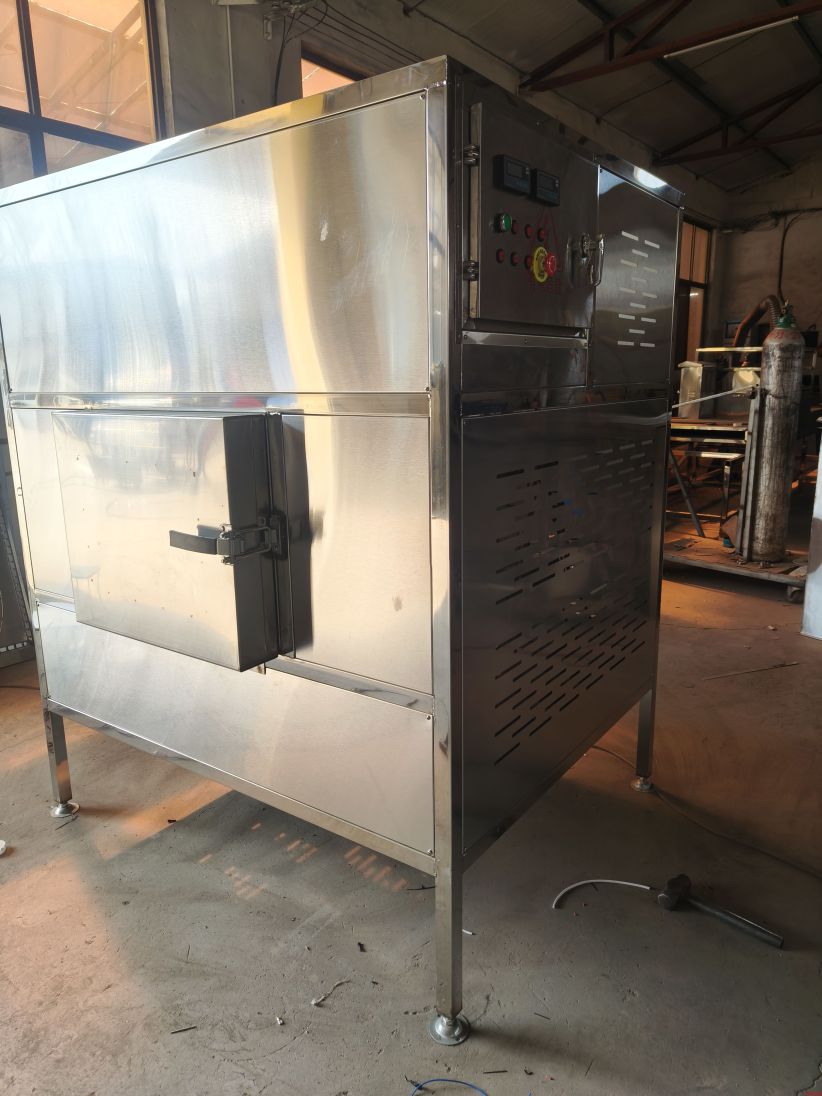
The technical principle and core advantages of graphene microwave cracking furnace
Laboratory microwave high-temperature muffle furnace | High temperature sintering furnace | High temperature box furnace |
Graphene microwave cracking furnace is a specialized equipment that uses microwave energy to prepare graphene materials or recycle organic waste resources. Its core principle is to use the bulk heating characteristics of microwaves to rapidly vibrate polar molecules (such as carbon sources or molecules in organic waste) inside the material in a high-frequency electromagnetic field, generating heat and triggering cracking reactions. Compared with traditional heating methods, microwave cracking has advantages such as uniform heating, high efficiency, and fast reaction speed, especially suitable for the requirements of material morphology integrity and delamination effect in graphene preparation. In the graphene preparation scenario, microwave energy can be directed towards the carbon source material, promoting its rapid decomposition and forming structurally intact graphene layers; In waste disposal scenarios, organic components can be efficiently cracked to achieve resource separation and recycling.
Key technical characteristics of graphene microwave cracking furnace
Core technical parameters
The performance of a microwave cracking oven depends on its precise control of temperature, power, and reaction environment. Typical technical parameters are as follows:
Parameter category; Typical configuration and values
Working frequency; 2.45GHz (commonly used industrial microwave frequency band)
Power Range; 1-50kW (adjustable, suitable for different processing capacity requirements)
Temperature control accuracy; ± 5 ℃ (to ensure stable cracking reaction)
Heating method; Microwave body heating (internal heat source, no temperature gradient) [2]
Environmental control; Support inert gas protection (such as nitrogen atmosphere)
Equipment Structure and Performance Highlights
- Efficient energy conversion: Microwaves directly act on material molecules, increasing thermal energy utilization by 30% -50% compared to traditional heating, significantly reducing energy consumption.
- Material morphology protection: A fast and uniform heating method reduces the structural damage of carbon materials at high temperatures, resulting in higher integrity and fewer defects in the prepared graphene layers.
- Multi functional adaptability: It can handle solid carbon sources (such as graphite, biomass charcoal) and organic waste, while also considering graphene preparation and resource recovery scenarios.
- Intelligent control: equipped with PLC control system, real-time monitoring of temperature, pressure and other parameters, realizing fully automatic cracking process.
Typical application scenarios of graphene microwave cracking furnace
1. Preparation of high-performance graphene materials
In the field of graphene synthesis, microwave cracking furnaces can achieve efficient preparation through the following pathways:
- Graphite intercalation peeling: Place the graphite treated with intercalation agent in a furnace, microwave heat to rapidly expand the intercalation agent, and achieve uniform peeling of graphene layers. The number of product layers can be controlled within 1-5 layers.
- Biomass carbon conversion: Using biomass such as straw and lignin as raw materials, it is converted into doped graphene through microwave cracking in one step, while recovering volatile components as fuel or chemical raw materials.
2. Resource utilization of organic waste
Learn from the proposal put forward by Professor He Daping's team at Wuhan University of Technology; Metal substitution and resource recycling; The concept is that microwave cracking ovens can be used to process carbon containing waste (such as waste tires, plastics) and achieve value conversion through the following process:
- Pyrolysis gas production: Organic waste is decomposed into combustible gases such as hydrogen and methane under microwave action, which are used as clean energy sources;
- Carbon residue recycling: After purification, residual solid carbon can be used to prepare graphene based materials for applications such as supercapacitors and adsorbents.
Technological challenges and future development directions
Current bottleneck
- Cost control: High power microwave sources and inert gas protection systems result in high initial investment in equipment, limiting its large-scale application;
- Product purity: Impurities are easily introduced during the cracking process of biomass or waste, and efficient purification processes are required;
- High frequency band expansion: Currently, research is mostly focused on 2The application of high-frequency microwaves such as terahertz in graphene preparation in the. 45GHz frequency band has not yet been breakthrough.
Innovation Trends
- Multi band collaborative heating: combining terahertz waves and microwave technology to accurately regulate the growth process of graphene and improve conductivity to theoretical limits;
- Integrated System Design: Development; Cracking Purification Forming; Integrated equipment, such as combining graphene assembly film preparation process with microwave cracking, to achieve efficient production from raw materials to devices throughout the entire process;
- Green Energy Coupling: Utilizing renewable energy sources such as photovoltaics and wind power to drive microwave systems, reducing process carbon emissions, and aligning with; Dual carbon; goal
Industry value and development significance
The graphene microwave cracking furnace not only promotes the industrialization process of graphene preparation technology through efficient utilization of microwave energy and precise material control, but also provides new ideas for high-value recycling of organic waste. Its potential applications in fields such as 5G communication, new energy, and environmental protection, as proposed by the Wuhan University of Technology team; Metal substitution for RF microwave devices; And“ Wearable technology lightweight; Highly compatible with other directions, it is expected to become a key link between new material synthesis and resource circular economy, helping to achieve; Carbon peak, carbon neutrality; Strategic objectives.
Tags:
Microwave High Temperature OvenContinuous tunnel high-temperature sintering furnaHigh temperature push plate kilnRoller kiln | Microwave roller kilnMicrowave high temperature furnace | Muffle furnacHigh temperature tower vertical kilnHigh temperature mesh belt sintering kilnHigh-temperature shuttle bell kilnHigh-temperature quartz tube furnaceHigh-temperature microwave rotary kilnHigh-temperature crucible and saggerAir source heat pump drying and dehumidifying machHigh-temperature insulation refractory material